
Road Review: Fort Valley, Virginia’s Hidden Gem
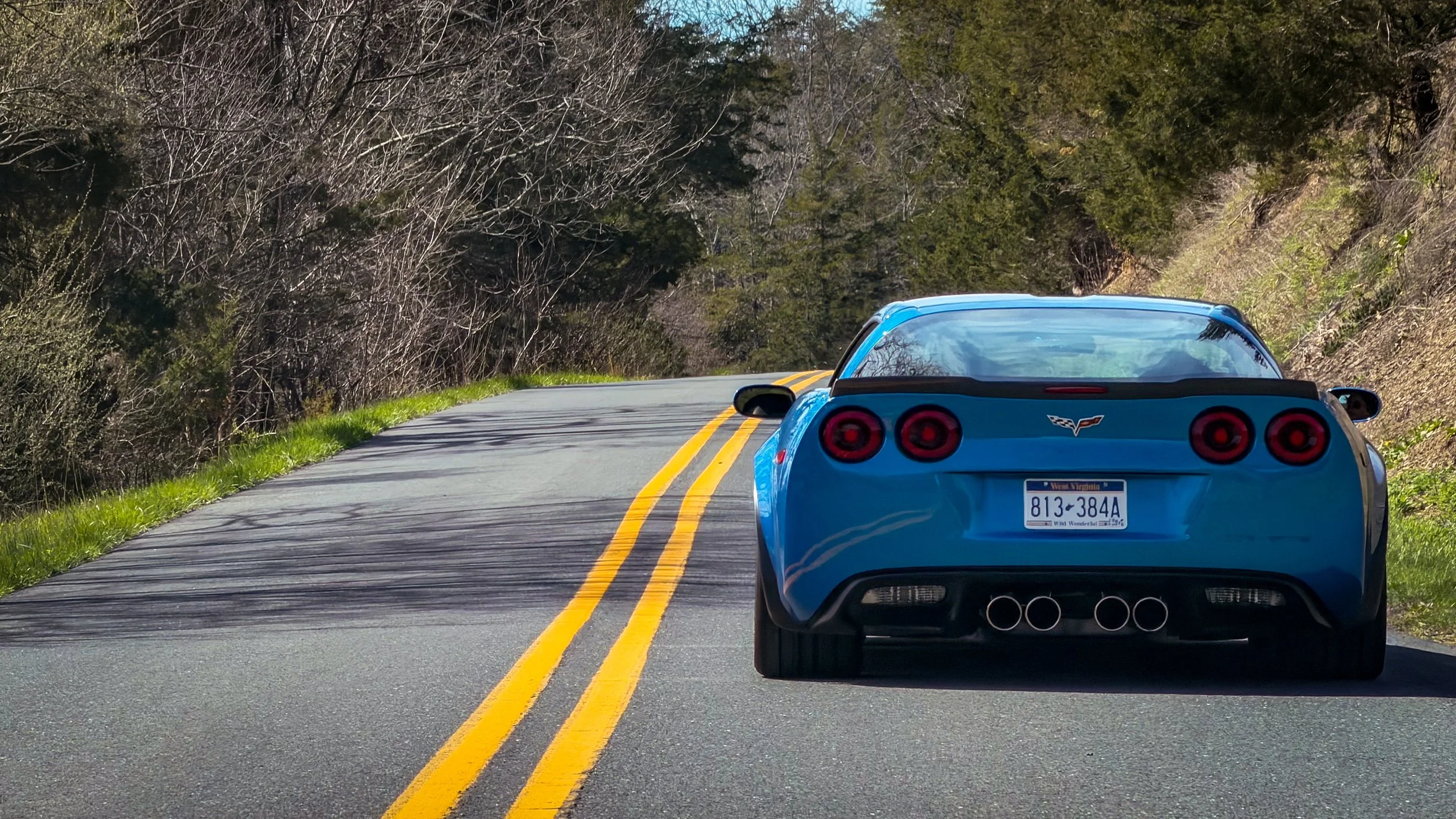
There’s something different about the roads that don’t try to be famous.
No roadside photographers.
No bumper-to-bumper traffic.
No one telling you how to drive it.
Just pavement, mountains, and whatever you brought with you that day.
Fort Valley Road—running quietly between Front Royal and Luray—doesn’t show up on most “top drives” lists. It doesn’t have a nickname. No stickers, no merch, no hype.
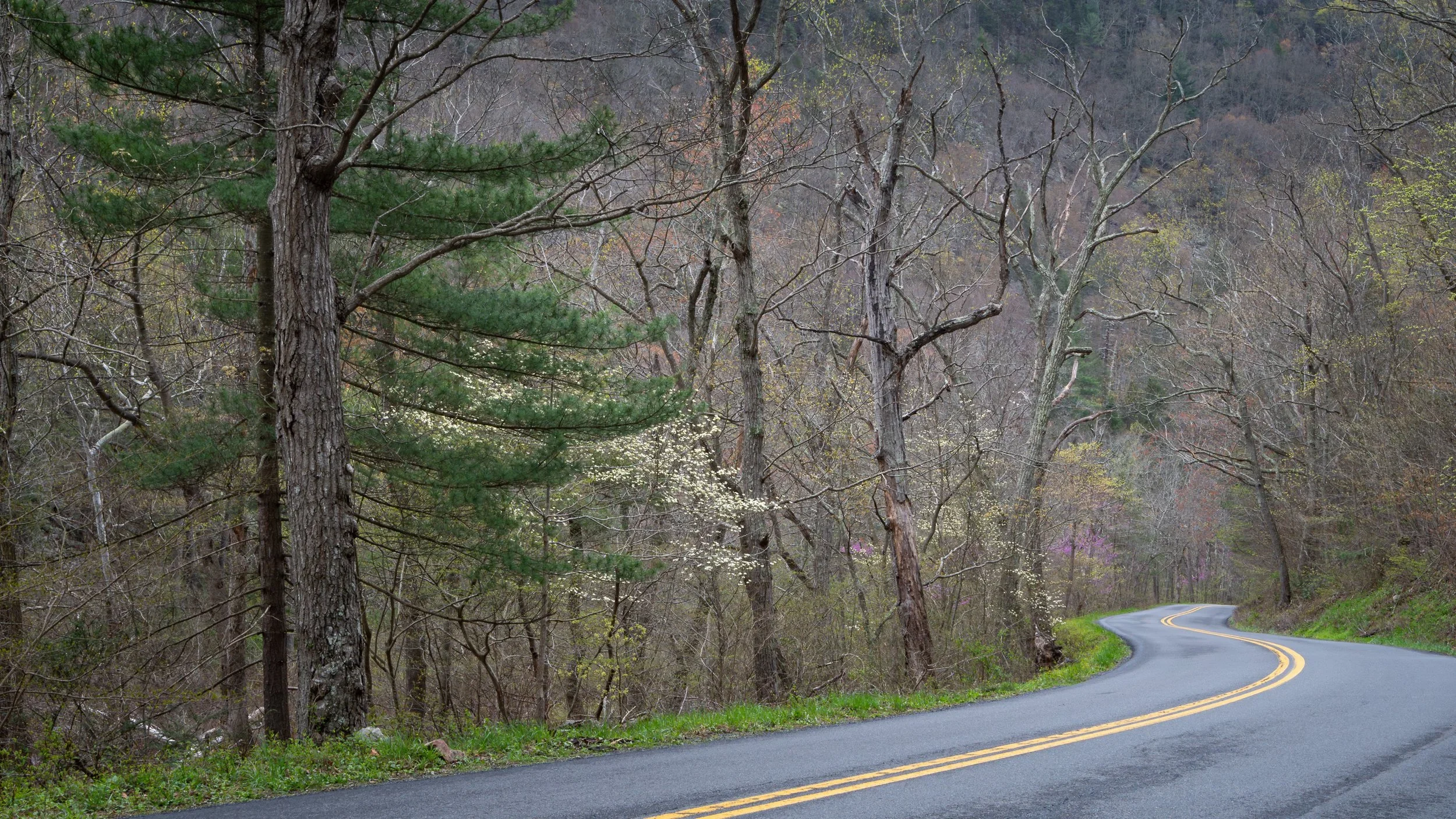
Just a quiet stretch of pavement nestled sweetly in the Blue Ridge
Sunday, me and a few close friends set out for a drive. It had been a few years since I’d made my way through Fort Valley, but it felt like a good way to kill a day.
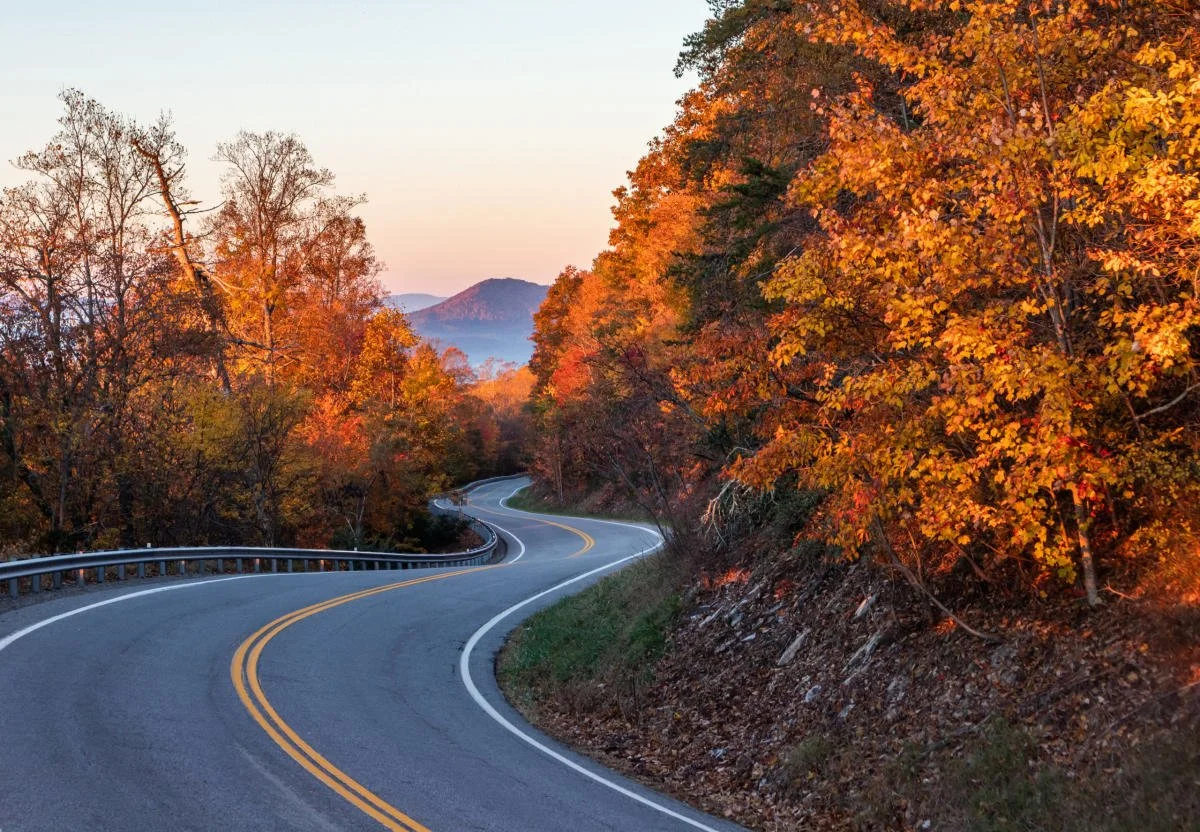
We met up at a Cars and Coffee in Stephens City, and before long it was me, Don, Stook, and their wives rolling out together, heading toward Strasburg.
Strasburg Road itself is a nice, flowing little double yellow—one of those country roads that quietly reminds you why you started doing this in the first place. It winds its way back toward Front Royal, and honestly, it’s worth the drive on its own.
Don led the way. I settled into the middle. Stook brought up the rear.
Somewhere along the way, I caught myself laughing. Almost 20 years ago, Don was the one who pulled me into this world—chasing corners, chasing roads, chasing whatever it is that keeps us coming back. Now after all these years I was still following him down the same back roads. It would infact seem… that I’m getting old (sigh).
Fort Valley was one of the first drives I ever did with him.
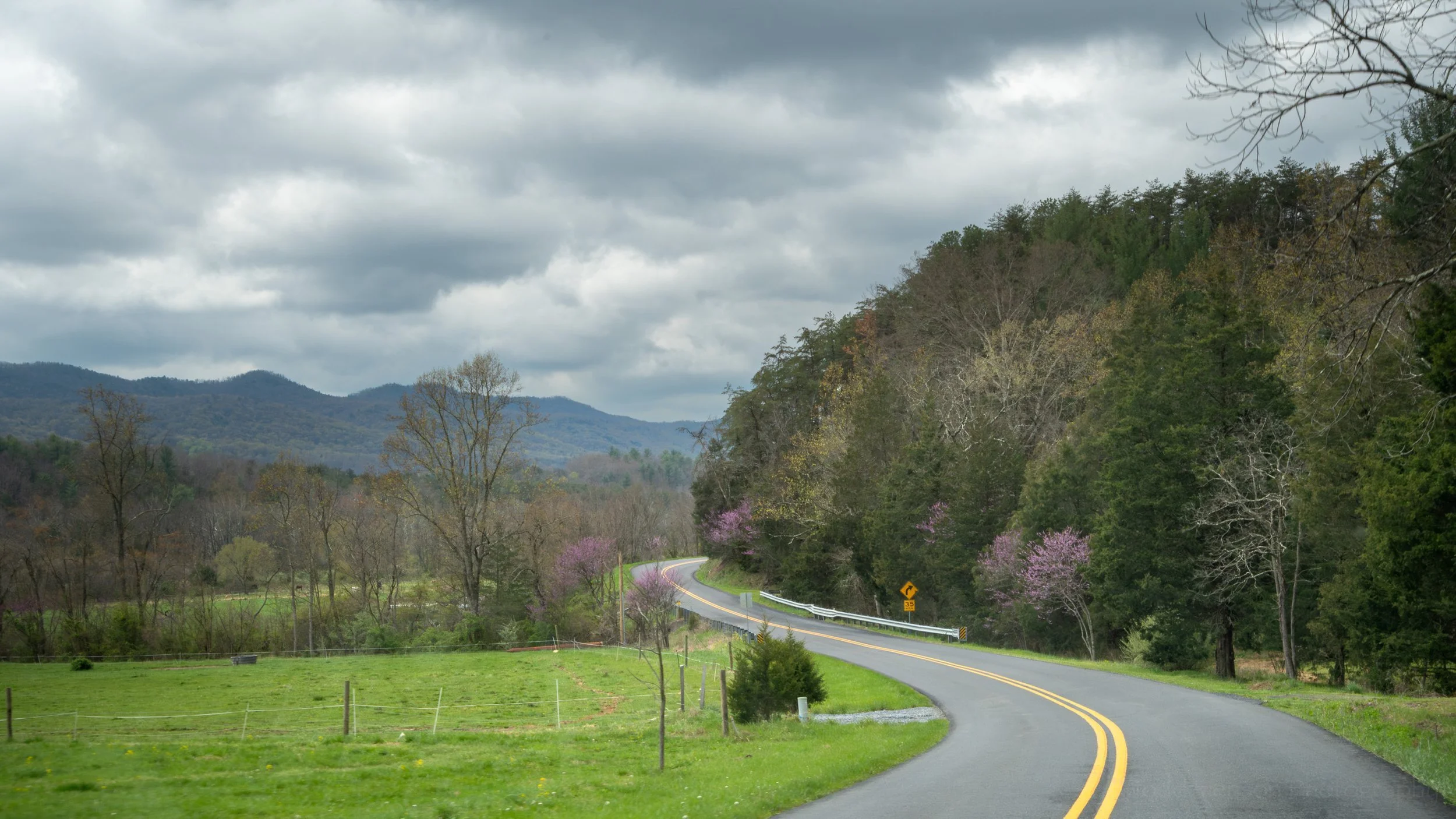
We turned onto Fort Valley Road, and Don picked up the pace just a touch.
The road settles into a rhythm almost immediately. Tight, well-connected turns that keep the car loaded—never quite giving the suspension a chance to relax, but never overwhelming you either. It flows in a way that feels familiar… almost like Moonshiner 28 down in North Carolina, just without the elevation to match.
The first section cuts through the George Washington National Forest in an area called Elizabeth Furnace. It’s a popular hiking and camping spot, and even in early spring it was already starting to fill up with people looking to get back outside.
We kept the pace pretty relaxed through there, just rolling along until the road opened back up.
From there, Don picked things up a notch—and that’s where the road really starts to show itself.
It’s naturally feels quite fast even though you aren’t full send. Something else is always pulling your attention away. As you work your way down the valley, the trees start to break and give way to open meadows, and rising up off the left side is Massanutten Mountain Range.
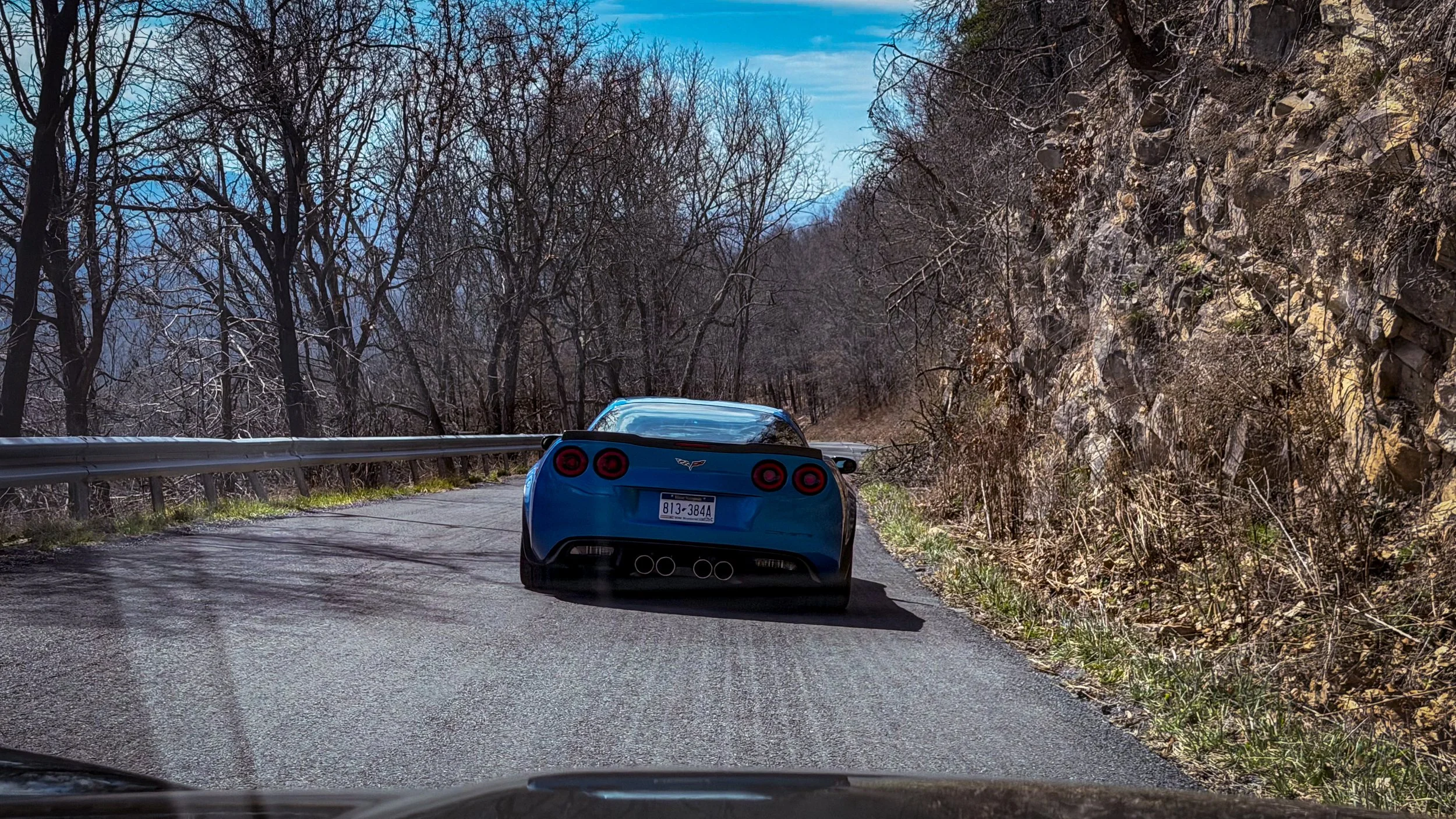
The views are unreal—even in early spring, before everything comes back to life and shakes off that dull, end-of-winter look.
As you make your way down the valley, the double yellow eventually disappears as you begin the climb up Waterfall Mountain. It’s a steep, switchback-heavy section, and the pavement quality takes a noticeable hit compared to the valley you just left.
This is where it pays to take it easy—the road will punish you if you don’t.
It narrows up quite a bit as well, so you’ve got to stay mindful of blind corners and oncoming traffic that doesn’t always respect the centerline.
Near the top, you’ll come across an overlook. Unfortunately for us sports car drivers, it’s not paved, making it a bit of a challenge to pull off in anything low. On this particular day, it was packed with our two-wheeled brethren taking in the view.
And honestly, you can’t blame them.
Because what you’re looking out over is Page Valley—and it’s every bit as good as you’d hope.
From there, the road drops off the other side of the mountain just as quickly. A few more tight switchbacks, a snaking downhill, and before long you’re spilling out into Luray.
As you come into Luray, the pace of the drive comes to a halt pretty quickly—but not in a bad way.
Luray has that classic mountain town feel. A little bit of everything. You’ve got roadside diners, coffee shops, antique stores, and the kind of places you end up wandering into without really planning to. It’s also home to Luray Caverns, which pulls in a steady flow of tourists year-round, along with easy access to Shenandoah National Park and the Skyline Drive.
It’s the kind of place where a drive doesn’t just end—it transitions.
Maybe you grab a bite. Maybe you stretch your legs for a bit. Maybe you just sit for a second and let everything slow back down.
It’s not the kind of road you hear about.
There’s no name for it. No stickers. No reputation to live up to. No one at a gas station telling you that you have to go drive it before you leave town. And maybe that’s the point.
Somewhere along the way, a lot of the well-known roads stopped being about the drive. They became about the checklist—the photo, the story you tell after. Fort Valley never fell into that.
It doesn’t ask anything of you, and it doesn’t try to prove anything. There’s no pressure to push harder, no crowd to keep up with, no expectation waiting around the next corner. It just exists, quietly doing what good roads are supposed to do—giving you space to settle into the car and let the drive come to you.
And somewhere in that, the drive changes. You stop looking for the next turn, stop worrying about the pace, and stop trying to make it something it’s not. You just let it happen.
Maybe that’s why it stuck with me the first time—back when I didn’t know what I was doing, when every road felt new and every drive meant something even if I didn’t have the words for it yet.
And maybe that’s why, 20 years later, I found myself right back where it all started. Same road, same rhythm, the same feeling I’ve been chasing without really realizing it. Not trying to prove anything, not trying to check a box, not trying to keep up with anyone.
Just driving.